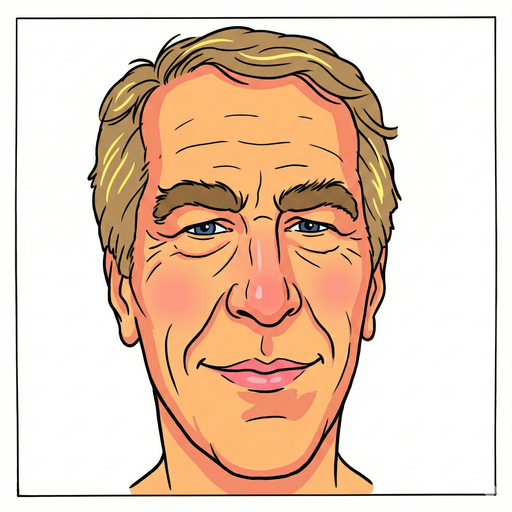
Jaan Tallin, a computer programmer, theoretical physicist, and investor, is a co
Epstein Suite indexes the text; the original document lives at its official source. We don't host the original file — view it on the official release to read it in full.
View the original on the official releasePeople & organizations named in this document
Being named here is not an accusation of wrongdoing.
Document text
Text is machine OCR and may contain errors. Confirm against the original source above.
DISSIDENT MESSAGES
Jaan Tallinn
Jaan Tallin, a computer programmer, theoretical physicist, and investor, is a co-
developer of Skype and Kazaa.
In March 2009, I found myself in a bland franchise eatery next to a noisy California
freeway. I was there to meet a young man whose blog I had been following. To make
himself recognizable, he wore a button with a text on it: Speak the truth even if your voice
trembles. His name was Eliezer Yudkowsky, and we spent the next four hours discussing
the message he had for the world—a message that had brought me to that eatery and
would end up dominating my subsequent work.
The First Message: the Soviet Occupation
In The Human Use of Human Beings, Norbert Wiener looked at the world through the
lens of communication. He saw a universe that was marching to the tune of the second
law of thermodynamics toward its inevitable heat death. In such a universe, the only
(meta)stable entities are messages—patterns of information that propagate through time,
like waves propagating across the surface of a lake. Even we humans can be considered
messages, because the atoms in our bodies are too fleeting to attach our identities to.
Instead, we are the “message” that our bodily functions maintain. As Wiener put it: “It is
the pattern maintained by this homeostasis, which is the touchstone of our personal
identity.”
I’m more used to treating processes and computation as the fundamental building
blocks of the world. That said, Wiener’s lens brings out some interesting aspects of the
world which might otherwise have remained in the background and which to a large
degree shaped my life. These are two messages, both of which have their roots in the
Second World War. They started out as quiet dissident messages—messages that people
didn’t pay much attention to, even if they silently and perhaps subconsciously concurred.
The first message was: Zhe Soviet Union is composed of a series of illegitimate
occupations. These occupations must end.
As an Estonian, I grew up behind the Iron Curtain and had a front row seat when
it fell. I heard this first message in the nostalgic reminiscences of my grandparents and in
between the harsh noises jamming the Voice of America. It grew louder during the
Gorbachev era, as the state became more lenient in its treatment of dissidents, and
reached a crescendo in the Estonian Singing Revolution of the late 1980s.
In my teens, I witnessed the message spread out across widening circles of
people, starting with the active dissidents, who had voiced it for half a century at great
cost to themselves, proceeding to the artists and literati, and ending up among the Party
members and politicians who had switched sides. This new elite comprised an eclectic
mix of people: those original dissidents who had managed to survive the repression,
public intellectuals, and (to the great annoyance of the surviving dissidents) even former
Communists. The remaining dogmatists—even the prominent ones—were eventually
marginalized, some of them retreating to Russia.
Interestingly, as the message propagated from one group to the next, it evolved. It
started in pure and uncompromising form (“The occupation must end!”) among the
dissidents who considered the truth more important than their personal freedom. The
70
HOUSE_OVERSIGHT_016873
Have a question about what this document contains?
Ask the documents